
1536 is the latest play to look at historical events through a different lens. Set during the year of Anne Boleyn’s execution, the play explores how the paranoia, suspicion and misogyny surrounding the royal court seep into the lives or Ordinary women far removed from it.
The play by Ava Pickett is nothing short of brilliantly written. Throughout the passage of the show we see how the lives of three women and those around them are impacted by the news in London and how the men that surround them are embracing the witch hunt for women who don’t conform.
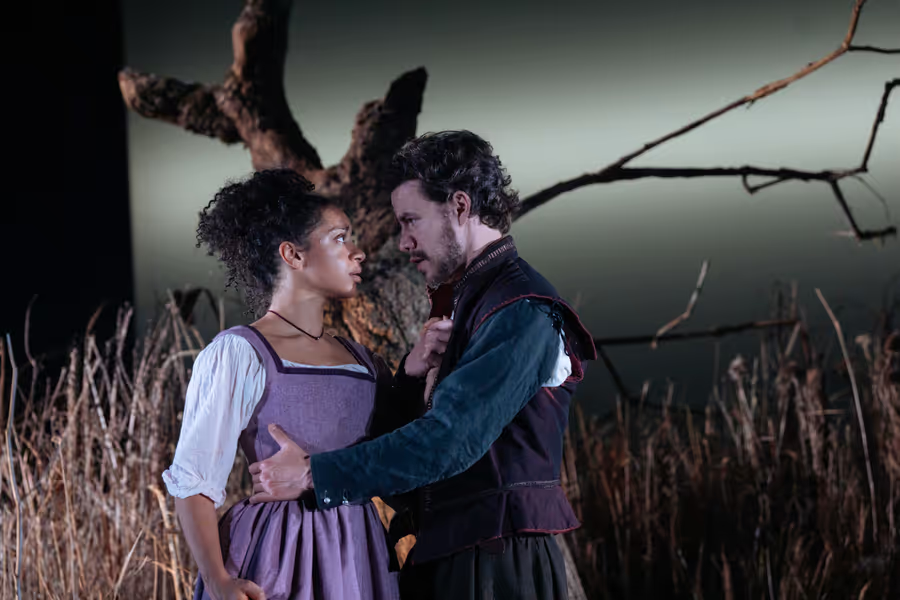
The play lays bare societies double standards around female sexuality and the danger faced by women who fail to confirm, showing how the attitudes shaped at the top of society can have devastating consequences for ordinary lives. Although set in Tudor England, Pickett’s writing draws unmistakable parallels with modern society, giving the play a striking and unsettling immediacy.
1536’s focus is on three women, Anna played by Siena Kelly who is known to be beautiful and as she proclaims ‘It is not a crime to be fancied,’ but as the tide turns rumours about her promiscuity look to have dangerous consequences. Kelly gives Anna a magnetic confidence and wit that makes it entirely believable that she captivates the men around her whilst her friends try to press on her that her flirtatious nature and fiery qualities could be weaponised against her. There is also Jane played by Liv Hill who sets out to be ‘good’ and keep herself under the radar whilst meanwhile she is described by Anna as plain. Jane’s character however becomes more complex and hardened as the play progresses and Hill charts this transformation with remarkable precision, culminating in final moments that leave the audience stunned. Despite the stark differences in the characters of Anna and Jane the play makes clear that neither compliance nor desirability can protect these women from the violence of society.
Completing the trio is Tanya Reynolds as Mariella who works as a midwife and often plays the mediator between Anna and Jane and has a sense of weary pragmatism about her that the other two do not possess. Reynolds strikes the balance of portraying a woman utterly realistic about her status yet still hurt by the consequences. Together their chemistry is electric, the audience gasp at their revelations to each other and how they interact and at the same time root for them to succeed both individually and as a unit. Pickett allows these women to exist in all their contradictions – loving, frightened and fiercely loyal in equal measures.
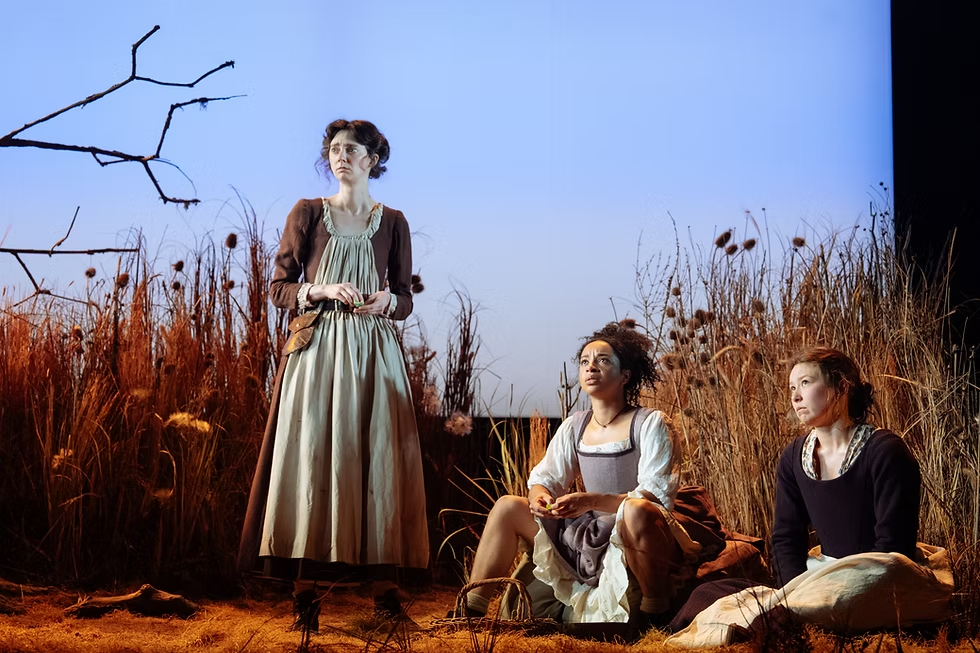
The set itself is a static set designed by Max Jones and is effective in its simplicity, a grassy overgrown field which shows just how far these women’s lives are away from the Royal Court. The constant set also helps keep the pace of the show alive and relies brilliantly on blinding lights and blackouts to portray the passage of time.
1536 is an arresting and deeply unsettling piece of theatre that refuses to allow its themes to remain confined to history. Ava Pickett’s script draws chilling parallels between Tudor England and the policing of women that still exists today, making the play feel urgent as well as intelligent. Combined with three extraordinary central performances and sharp atmospheric direction, 1536 becomes both a gripping historical drama and a stark warnings about the danger of fear, control and misogyny. It is bold, thought provoking theatre that feels uncomfortably relevant.
1536 is playing at The Ambassadors Theatre until 1st August. You can buy tickets here.
If you like this review you might also like my review of Cabaret, Witness For The Prosecution and Hadestown.