
Cable Street at Marylebone Theatre
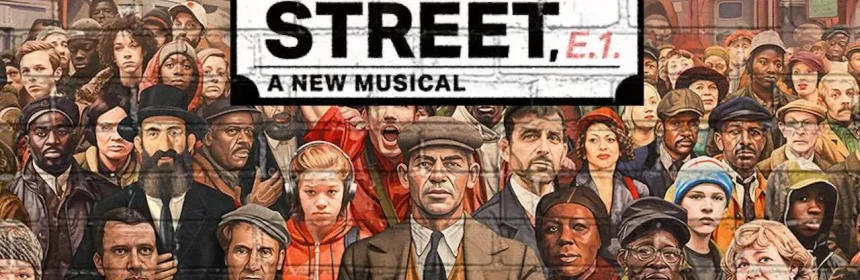
Cable Street makes its return to London, again. after 2 successful runs at Southwark Playhouse. Having missed the previous iterations I was determined not to miss it this time. The show is set in East London in 1936 in the lead up to the Battle for Cable Street. For those, like myself, unfamiliar with this piece of East London history the battle for Cable Street was a clash between the British Union of Fascists and anti-fascist demonstrators organised by the Independent Labour Party , The Communist Party and the Jewish People’s Council.
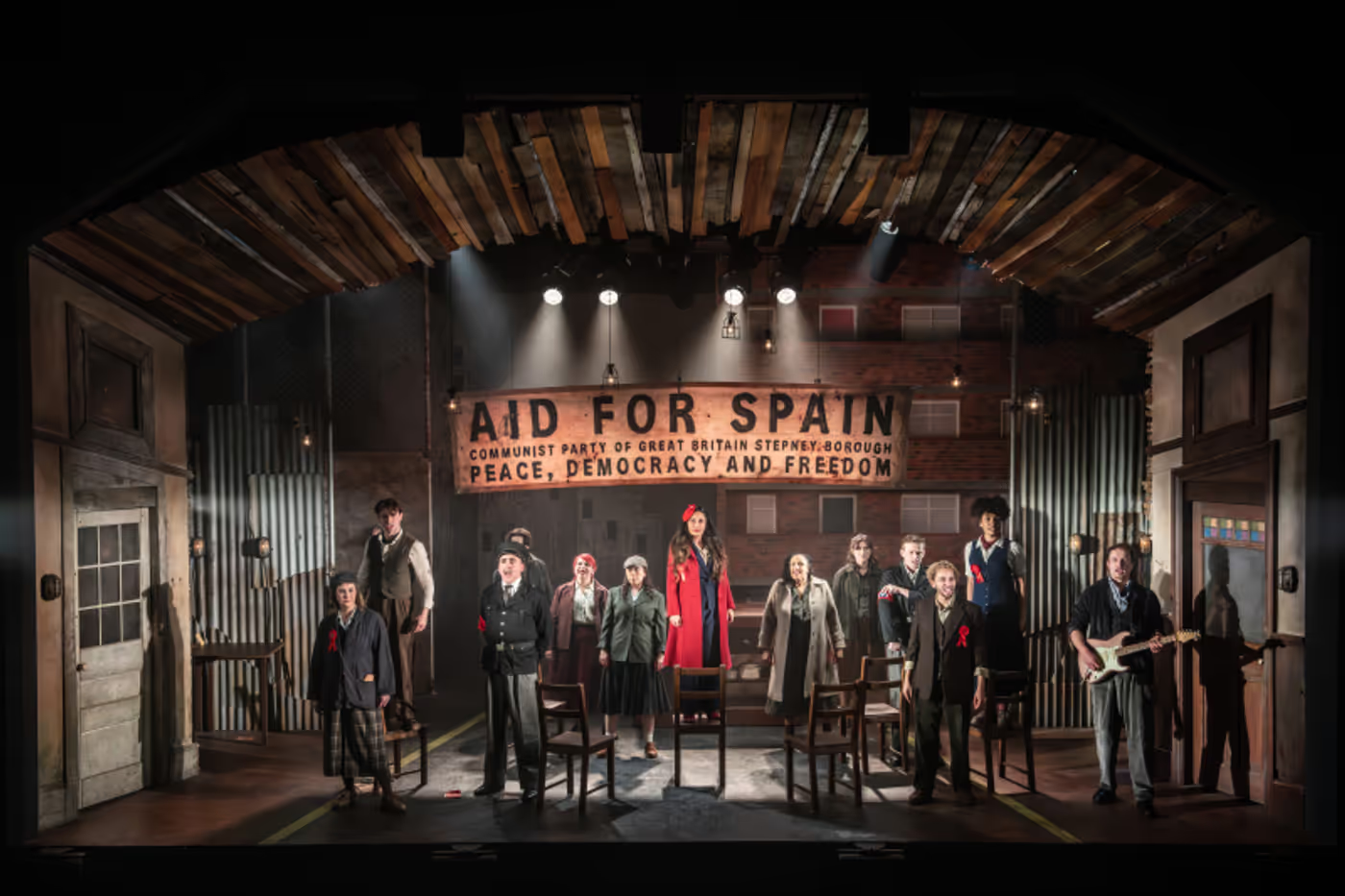
This musical looks at the battle and the lead up to it, framed through 3 families personal stories; the Kenny family who are a family of Irish immigrants, the Scheinberg family who are Jewish and we see their eldest son Sammy struggling to get a job and finally the Williams family, a British family who are struggling to make ends meet and the son, Ron, turns to fascism.
The book by Alex Kanefsky is cleverly written as he frames these big issues through personal connections and ensures that issues explored feel as relevant today as they did then. Through the stories of Ron Williams you can begin to understand why he was so disillusioned and therefore how the fascist party had such a big pull over these young men, equally through the eyes of Sammy Scheinberg we see the struggles that his Jewish family faced in simply trying to live their daily lives. Whilst the themes of fascism, anti-Semitism and the class struggle are heavy, hard hitting themes because of these well considered personal connections the show never feels like a history lesson but instead a story we are invested in. These themes also allow the audience to draw their own contemporary parallels making it even more relatable. Equally the book isn’t afraid to exist outside of the binary and it is clear that no lead character is always ‘good’ or always ‘bad.’
The staging by director Adam Lenson is also cleverly done, he weaves the families lives around each other on stage literally with imaginative direction which also helps underscore the point that dispute their differences they have a lot in common. The use of tables and chairs for multiple locations, from the barricade to the roof also helps ensure that the pace never drops.
The music by Tim Gilvin is overall strong although there were the odd moments that seemed out of kilter with the rest of the piece. Read All About it was a number that focused on the differing newspapers perception of what was happening however stylistically this jarred and failed to add to the storyline. The mixture of styles also worked well from the use of resistance songs including the emotive “No Pasarán” through to Irish Folk music and Sammy’s rap enhances the different cultures in Cable Street, although on occasion the rap influence was a bit too much of a stark difference to the rest of the musical influences. There are some stunning traditional emotive musical theatre numbers, in particular ‘Shut Me Out’ and ‘Only Words’ and it is moments like these when the music is at its strongest.
Cast wise there was a huge amount of talent on display. Barney Wilkinson as Ron Williams was heart-breaking to watch fall into the clutches of the black shirts and equally Isaac Gryn as Sammy Scheinberg is a compelling mixture of headstrong and cheeky. Lizzy-Rose Esin-Kelly as Mairead Kenny brings a fiery interpretation of her character to stage but ensures that her passion is always the right side of the line. All 3 of them have the charisma and vocal ability needed to lead this show. Whilst it is Ron, Sammy and Mairead’s journeys we follow the show really is an ensemble one. The rest of the cast are well utilised and all multi role brilliantly. Jez Unwin brings everything from tenderness and fear through to an intimidating presence to the variety of roles he plays and switches from Sammy’s father fearing for his family safety to a black shirt in the blink of an eye.
Ultimately, Cable Street is a timely and affecting piece of musical theatre that succeeds because it places people at the heart of politics, rather than the other way around. Its combination of thoughtful writing, imaginative staging and an ambitious, culturally textured score makes it more than a retelling of a historical moment; it becomes a reminder of the power of solidarity and the dangers of division. In a climate where the themes it explores feel uncomfortably familiar, Cable Street lands with real impact, making its return to London not just welcome, but necessary.
Cable Street is running until the 28th February at Marylebone Theatre. You can find out more and book tickets to Cable Street here.
If you like this review you might also like my review for Jo- The Little Women Musical, White Rose and Operation Mincemeat.