
Jaja’s African Hair Braiding at Lyric Hammersmith
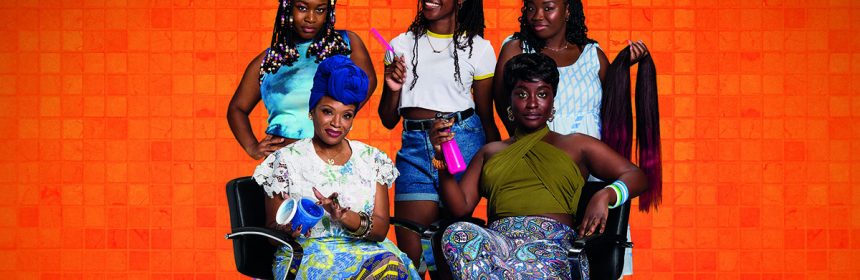
There was a real buzz in the air for press night for Jaja’s African Hair Braiding, after a nomination for best play at the Tony awards, Drama Desk awards and Drama League Awards as well as a hugely positive critical reception in the US this transfer was hotly anticipated and we were soon to learn, for very good reason.
The show is set in a hair braiding salon in Harlem where the owner’s daughter is running the shop for the day whilst her mother is marrying an American and getting her green card in the process. The 4 braiders in the shop deal with different customers and their own relationships, hopes and dreams. Jocelyn Bioh’s play skilfully embeds political commentary within the every day experiences of the women in the salon, alongside moments of astute humour. The play threads together themes such as education, marriage and ambition with immigration shaping many of the women’s experience. These ideas are never forced, instead emerging naturally through their day to day lives. Marie, for example, uses her cousin’s papers to access education despite being a valedictorian while Miriam faces separation from her daughter and Jaja herself delighted by her wedding as it means she gets a green card. When the tone shifts in the closing moments, the change is stark. It underscores how precarious their lives can be. Conversations that moments earlier felt matter of fact are suddenly revealed to carry real and immediate consequences and potentially upend their lives in a moment.
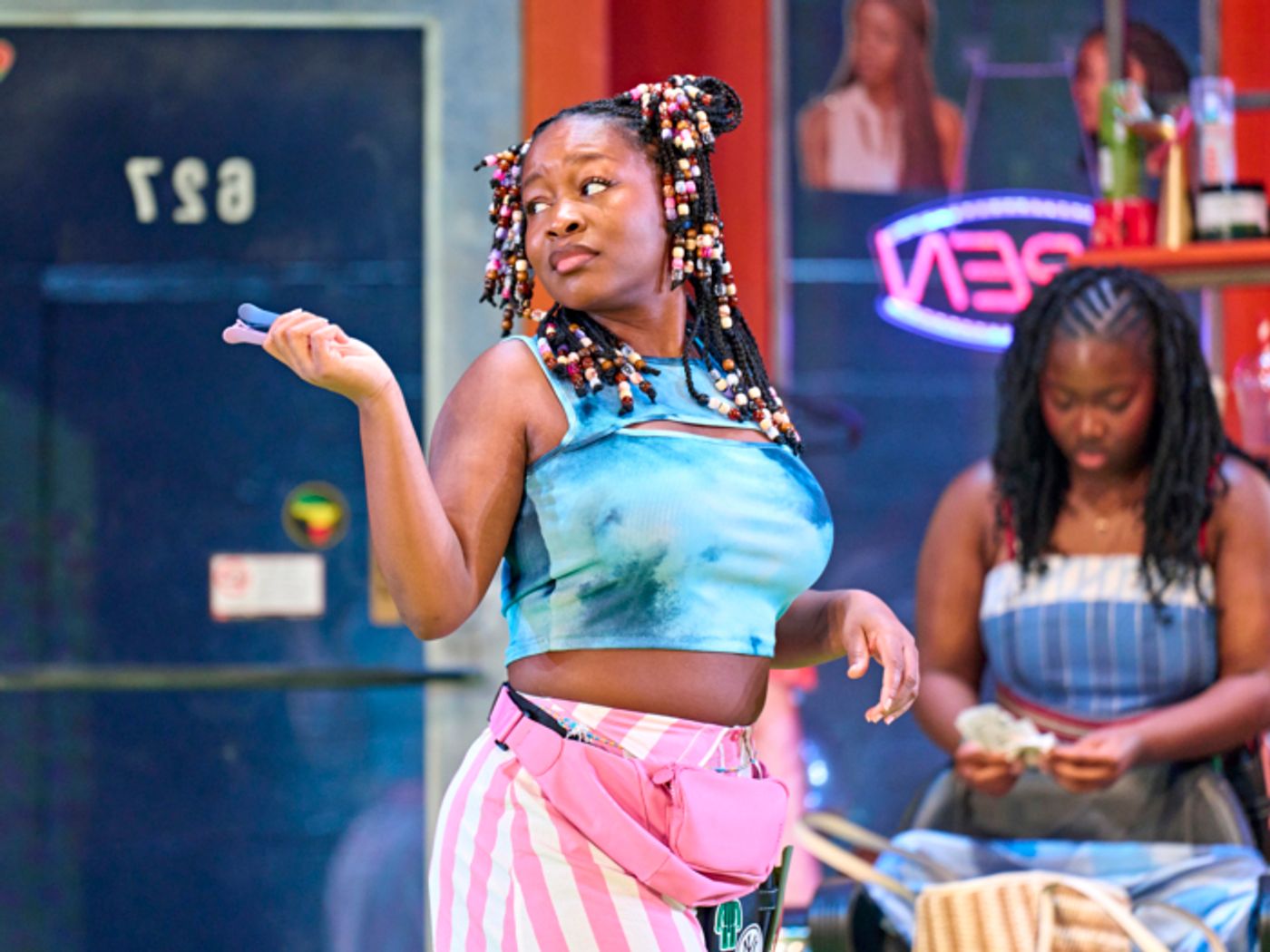
The characters are brilliantly drawn. There is a focus on the 4 braiders and Marie as we get to know them throughout their day in the shop. Marie is keen to pursue her ambitions out of the shadow of her mum. Sewa Zamba perfectly captures her as a girl on the cusp of womanhood. Her self assurance within the salon contrasts sharply with her more tentative demeanour when a classmate enters the space. Bea, played by Dolapo Oni is Jaja’s longest standing braider (as she keeps on reminding us) and loyal, often to a fault. Oni plays her with a huge amount of ferocity. As the play develops you begin to see the softness at the core of the woman. Jadrsola Odunjo’s Miriam is a wonderful contrast to Bea, initially quiet and unassuming. It was only when she begins to speak about her life that the other side of her emerges. Odunjo’s portrayal makes both sides of her character’s personality quietly compelling. Aminata, played by Babirye Bukilwa oozes confidence and zest for life so when she allows her husband to walk over her it is one of the more gut wrenching moments of the show. Completing the quartet of braiders was Ndidi played by Bola Akeju who was the newest braider, brought a real energy to the stage. Whilst individually they were excellent together it was their relationships and chemistry that made this a standout ensemble piece. The ensemble also multi role – playing a variety of customers and other visitors to the shop throughout the day.
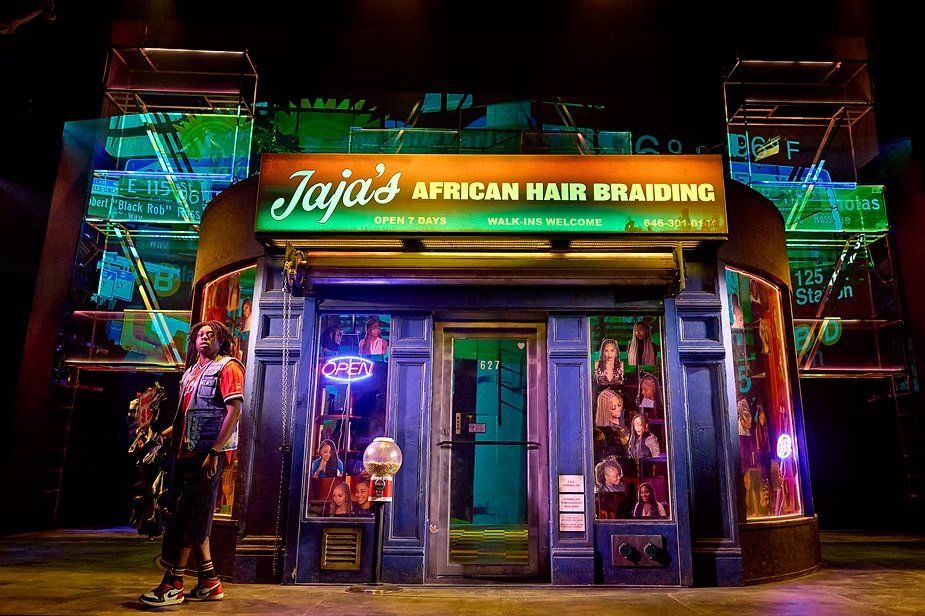
The colourful set was excellent, upon entry into the auditorium the audience are greeted with the façade of the shop. It soon revolves to reveal the bright shop interior, adorned with pictures of the various braid styles and the chairs where much of the action unfurled from. The set design by Paul Wills allowed the day at the shop to unfold naturally. Action flowed clearly throughout, with moments outside the shop visible even as scene continues within.
The show also won a Tony award for hair and wig design and it was easy to see how this arose with the demands of the show. Cynthia De La Rose designed the wigs, hair and make-up and throughout the course of the show the customers hair was transformed into a variety of styles of braids from box braids to Beyonce’s lemonade braids. It wasn’t just the customers braids that deserved attention, the braiders hairstyles themselves really helped establish their own sense of identity.
Jaja’s African Hair Braiding is a production that finds its power in the rhythms of everyday life, allowing humour, warmth and community to sit alongside uncertainty without ever feeling heavy handed. By centring these women in all their complexity, the play invites the audience into the space of the salon not as observers of a single story, but as witnesses to many lives unfolding at once. It is this balance of intimacy and authenticity that marks this as a deeply human piece of theatre.
To find out more and book tickets for Jaja’s African Hair Braiding you can visit their website here.
If you liked this review you might also like my review of Hadestown, Hunger Games on Stage and The Mousetrap.