If you are wondering what all the buzz in Theatreland is about right now, look no further than Jesus Christ Superstar. Fir the third consecutive summer, an Andrew Lloyd Webber musical has returned to the West End, with this acclaimed Regent’s Park Open Air Theatre production now taking centre stage. Originally conceived as a 1970 rock concert album before becoming a Broadway and Wet End phenomenon, Jesus Christ Superstar focuses on the the final days leading up to the crucifixion and in particular Judas and his disillusionment with Jesus and the mob mentality at the time. This production is based on the Regent’s Park production that first hit London in 2016 and has returned in various guises in the intervening 10 years. Having previously seen this production three times- rating it everywhere from three stars to five – I was fascinated to discover where this latest incarnation would land.
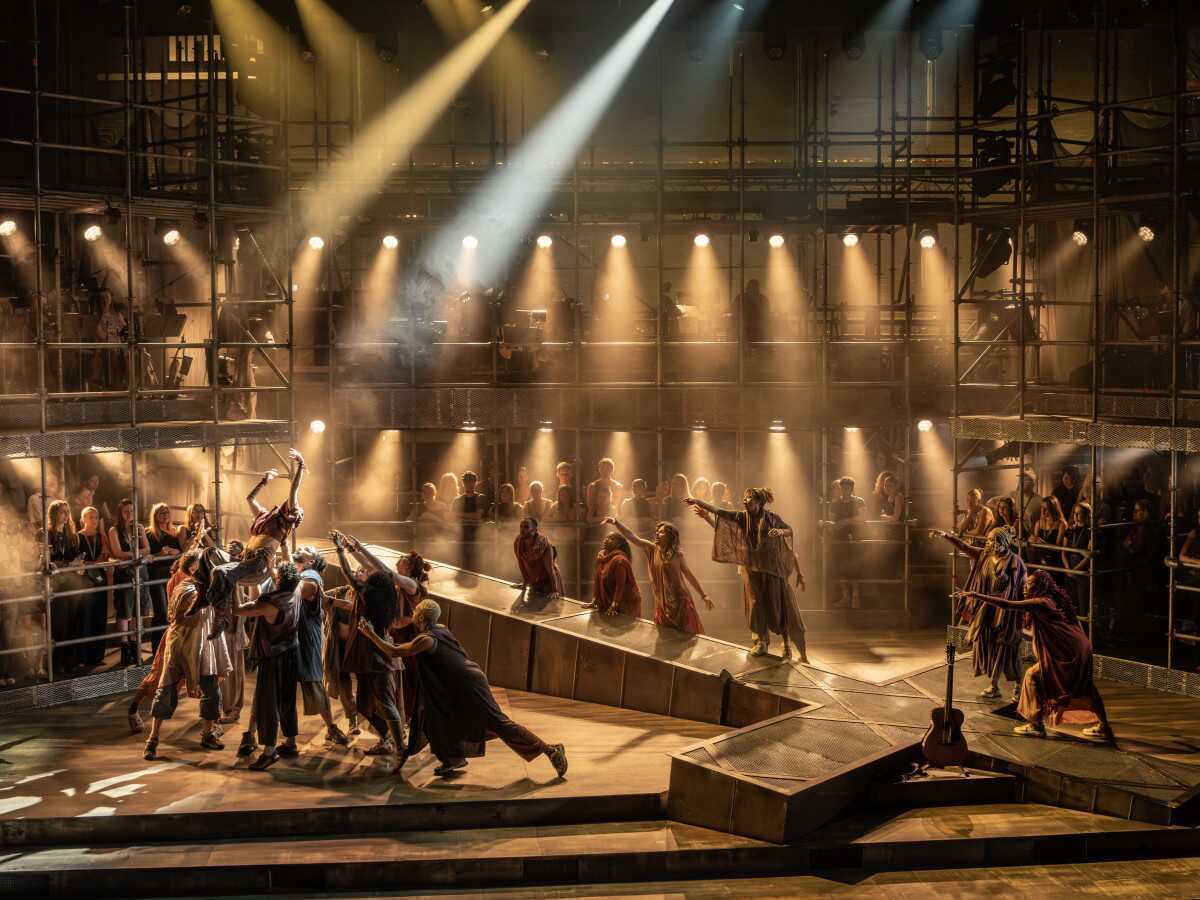
Director Tim Sheader and choreographer Drew McOnie consciously reject naturalism. Priests’ staff transform into microphone stands, Jesus picks up a guitar in Gethsemane and Pilate’s brutal flogging is symbolised through showers of glitter. It is an unexpected theatrical language but one that perfectly embraces the show’s rock – concert aesthetic without sacrificing any emotional weight.
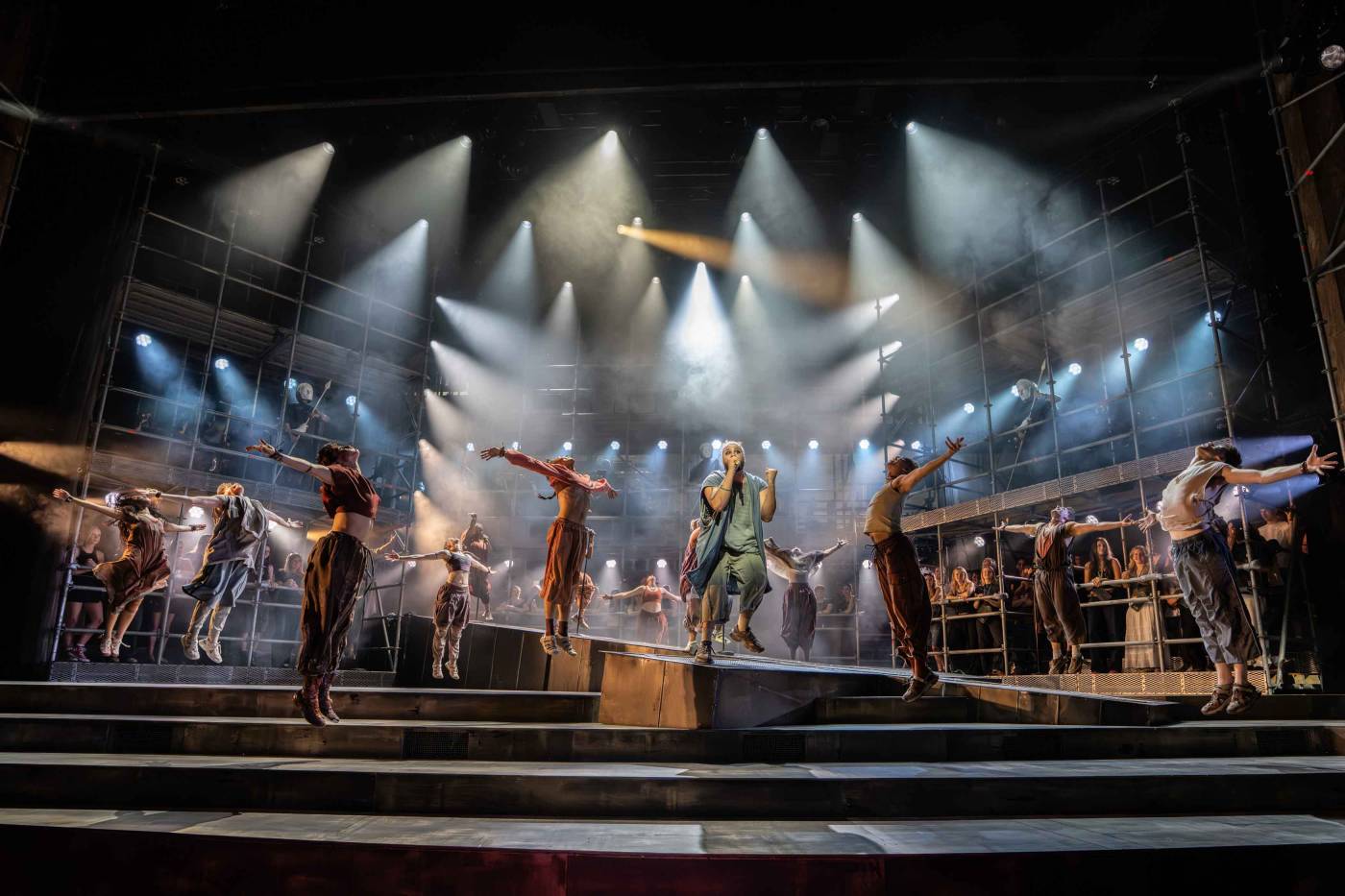
McOnie’s choreography additionally assisted in portraying the idea of Jesus’ followers getting whipped up into a frenzy and the street style of dance helped the show feel current. The themes of urgency and the mob mentality underlining every moment really shone through in every single aspect of this production. At every moment the ensemble felt like a real unit of followers and their passion depicted towards Jesus never let up.
These feelings are heightened thanks to many of directors, Tim Sheader’s choices, throughout the show many of the cast emerged or existed into the auditorium helping us feel like we really were bearing witness to these events being depicted and even more so was the ingenious idea to place some audience members on stage. What could easily have felt like a gimmick instead proved one of the production’s smartest decision. The onstage audience really added to the feel that the last few days of Jesus’ life were spiralling out of control as far as the masses were concerned and giving extra conviction to Judas’ arguments.
Sam Ryder takes on the part of Jesus and he shows us just why he has one of Britain’s most distinctive contemporary rock voices. Whilst his voice was brought to us through Eurovision he is clearly far from a one trick pony and he was able to sing with remarkable ease the role of Jesus, a fiercely demanding role for even the most seasoned musical theatre professional. His rendition of Gethsemane resulted in a well deserving standing ovation and it wasn’t just that Ryder could sing the notes, his anguish was apparent through every note of the song and he charts Jesus’ emotional collapse with increasing vulnerability.
Tyrone Huntley returned to the role of Judas and it is clear to see why he has returned to this role numerous times as his vocals possess extraordinary bite, but it is the conflict simmering beneath every line that makes his Judas so compelling. David Thaxton is another standout performance as Pontius Pilate. Thaxton combines effortless rock vocals with genuine authority making Pilate feel less like a villain and more like a reluctant participant in events already beyond his control.
There are numerous King Herods across the run and I saw Jesse Tyler in the role in a fun and very camp moment of lightness in what is otherwise a heavy show.
A huge part of Jesus Christ Superstar is the fact that it is undeniably a rock musical and therefore the band and sound must be spot on. The band, led by Tom Deering fulfilled this criterion from the first chord and it was raw, urgent and unapologetically rock. The rock feel of the show was exaggerated by the frequent use of handheld microphones and this also emphasised the feeling of playing to the masses. A downside to this is that sometimes I would have liked more volume from Ryder’s microphone as his volume was more varied than the rest of the principal cast.
Tom Scutt industrial set and Lee Curran’s atmospheric lighting design work hand in hand to immerse the audience form the outset into this world and the ever-present cross on the floor of Scutt’s set ominously foreshadowing what was to come, whilst Curran’s lighting design both captured a gig feel in the big moments but also made the more tender moments such as ‘I Don’t Know How To Love Him,’ feel personal and intimate.
There is a reason why this production continues to return and find new audiences nearly a decade after it first appeared at Regent’s Park. Rather than feel like a revival of a revival it remains thrilling, immediate, finding fresh relevance in its exploration of collective hysteria. Backed by a phenomenal company, a blistering score and staging that feels both intimate and spectacular this is Jesus Christ Superstar at its best.
Jesus Christ Superstar is playing at the London Palladium until 5th September and at Theatre Royal Drury Lane from the 16th October – 9th January where it will then continue on its tour. You can find out more and book tickets here.
If you like this review you might also like my review of Beetlejuice, Hadestown and Phantom of the Opera.